
What Is Gotcha Day? How to Celebrate It, and Start a Pet Weight Log
A gotcha day is the anniversary of the day your pet came home. Simple ways to celebrate it, and how to use the day to start a weight log your vet can read.

A gotcha day is the anniversary of the day your pet joined your family. If you don't know your rescue's birthday, it can be the day you celebrate instead; if you do, it can sit alongside the birthday. You can celebrate it simply: a photo in the same spot as day one, a favourite walk, ten minutes rewatching last year's videos. It is also a good day to start a habit veterinary guidelines encourage: monitoring your pet's weight at home. Weigh the same way each time and write the number down, so that a slow change shows up as a trend.
Somewhere in your phone there is a photo from that first day: the too-big carrier, the uncertain first sniff of the hallway, the name you weren't sure about yet. This guide covers both halves of a good gotcha day: the celebration, and a weight log that costs nothing to keep.
The second half is a guide to record-keeping, written by Memofu's developer, not a veterinarian. It is not veterinary advice: questions about your pet's weight or health belong with your vet, and if something about your pet worries you, call your clinic rather than waiting for the next weigh-in.
What is a gotcha day?
A gotcha day is the anniversary of the day your pet joined your family, the day you "got" them. Dictionary.com describes Gotcha Day as "the day people celebrate bringing home their new pet, usually a rescue." If your rescue's birthday is unknown, it can be the day you celebrate instead. If you know the birthday, the two can sit side by side. A birthday marks when they were born; a gotcha day marks your life together, and it's usually a date you know exactly, even when the birthday is a guess.
If you'd still like to give your rescue a birthday, how to pick a birthday for a rescue pet covers the common ways families choose one.
Counting from that day changes how the whole archive feels. "Family for 847 days" tells a story that a folder of files never will. (Memofu's pet timeline counts every day from gotcha day in just this way.)
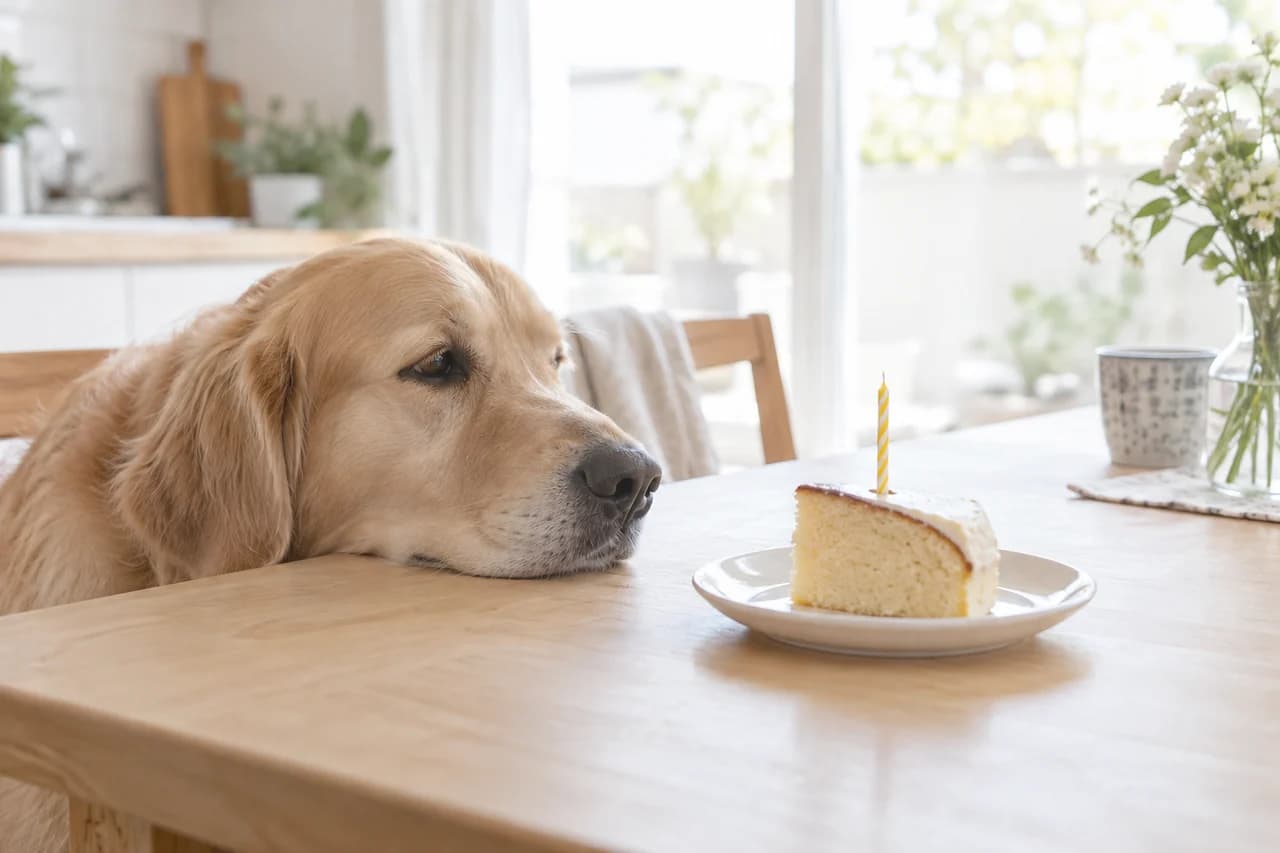
Why celebrate a pet's adoption anniversary?
Because an anniversary is a scheduled reason to look back, and looking back rarely happens on its own. The photo-printing company Popsa's 2026 trend report, based on a survey of 8,000 people in the US, UK, France and Germany conducted by Censuswide in February 2026, reported that seven in ten photos taken are never looked at again. The photos exist; the remembering needs a date.
An anniversary gives it one: flip through year one, watch the shaky first-week videos, notice how small they were. A ritual does for memory what a routine does for health. It makes the good thing happen by default.
How do you celebrate a gotcha day?
With a few small rituals: a same-spot photo, a short letter, a treat, a rewatch of last year's videos and a weigh-in. None of them needs party supplies.
- The same-spot photo. Recreate the first-day photo in the same doorway or corner, every year. By year five, the series tells its own story.
- The annual letter. Three sentences about who your pet was this year. ("This was the year you claimed the sunny end of the sofa.")
- The treat. Something special from the treats you already know agree with your pet. The decorative cake is for the humans.
- The rewatch. Ten minutes, together as a family, watching last year's videos. This is the whole point of having taken them.
- The weigh-in. Which brings us to part two.
Why start a weight log on gotcha day?
Because a weight is only useful as a trend, and a trend needs a first reading taken on a day you'll remember.
When you notice a change, it is often hard to say when it started, and memory is vague about slow changes. Weight is a number you can measure at home, for free, without guessing. When you do spot something, our guide to describing your pet's symptoms to the vet shows how to tell your vet when it started, how much or how often it happens, and how it has changed.
Veterinary guidelines take it seriously. The American Association of Feline Practitioners' 2021 guidelines on caring for senior cats say that unexplained trends in body weight "must be investigated and managed as diseases". They add that routine check-ins at the clinic, and teaching owners to monitor weight and body condition at home, "can improve early detection of negative trends". The World Small Animal Veterinary Association (WSAVA) nutritional assessment guidelines, which cover dogs and cats, list "unexplained weight change" among the risk factors that can prompt a fuller evaluation, and ask owners to monitor body weight and body condition at home.
The catch is that one reading tells you little on its own. A series taken the same way shows the direction, which is why the habit matters more than the tool.
How do you weigh a cat or small dog at home?
Use the two-step bathroom-scale method: weigh yourself holding your pet, weigh yourself alone, and subtract.
- Step on the bathroom scale holding your pet. Note the number.
- Step on it alone. Subtract.
Use the same scale each time, at roughly the same time of day (before breakfast is easy to remember). A bathroom scale isn't a laboratory instrument, but consistency makes the trend trustworthy even if the absolute number is a little off. WSAVA's guidelines, written for vet teams, make the same point: use a consistent method and scale to measure body weight, so that changes over time can be assessed.
Kittens, puppies and very small pets: a scale that reads in smaller steps, such as a baby scale or a kitchen scale with a bowl, shows smaller changes than a bathroom scale. Hill's guide to weighing a cat at home suggests that very small kittens might be best weighed on kitchen scales to start with.
Overweight cats: Cornell Feline Health Center's page on obesity quotes a veterinarian who recommends that owners of overweight cats buy a baby scale to monitor weight at home.
Big dogs: ask your clinic whether you can use their scale between visits. If you can, fold it into a regular walk.
When is a weight change worth a call to the vet?
When you can't explain it, or when anything else about your pet worries you. How much change matters for your pet is a question for your vet, not for a rule of thumb.
- Size changes what a change means. The AAFP senior care guidelines note that petite cats may not change much in absolute terms, but a proportional change could be significant. Under fur, a small change is easy to miss by eye. In a log, it's there in the numbers.
- Direction beats any single number. Several readings drifting the same way say more than one odd reading. Re-weigh a strange result the next morning, the same way, before reading anything into it.
- Write the context down. Switched food, more walks, a hot week: the note next to the number is what makes the log useful at the clinic.
- Don't wait for the log. If your pet seems unwell, call your clinic now. A weight log is for slow changes, not for deciding whether today is urgent.
At your next check-up, ask what kind of change should prompt a call for your pet, and write the answer at the top of the log. For how weight fits into a complete health record, how often to write in it and what your vet actually wants to see, read why pet health records matter.
What should a pet weight log include?
Four columns: the date, the weight, the scale you used and one short note about context. Print this, stick it on the fridge or inside a cupboard door, and add a line each time you weigh:
| Date | Weight | Scale used | Notes |
|---|---|---|---|
The house rules: same scale, same time of day, one honest note. That's it.
What should you do on your pet's next gotcha day?
Five small things: take a photo, weigh your pet, pick the next weigh-in date, note two questions for your vet, and rewatch last year's videos.
- Take the same-spot photo. The first one starts the series.
- Weigh your pet with the method you'll keep using, and write the first line of the log.
- Pick the day you'll weigh again and put it in your calendar. The date your pet came home, repeated each month, is easy to remember; check with your vet that the rhythm suits your pet.
- Ask two questions at the next check-up: how often to weigh at home, and what change should prompt a call. Write both answers on the log.
- Rewatch last year's videos together. Ten minutes is enough.
How can Memofu help with gotcha day and a weight log?
In Memofu, gotcha day and your pet's weight history live in the same app as the photos, with the weights on a chart. It's there for when paper stops being enough. Here is what it does today:
- Gotcha day is part of your pet's profile. The timeline counts "family for N days" from it, and Memofu remembers gotcha days, birthdays and "one year ago today".
- Weights are logged in kg or lb by the pet's owners and co-owners, and the health tab charts the trend.
- Every health record is free, weights included, with the full history on every plan. So is a read-only health link you can send a vet or sitter, which expires after 1, 7 or 30 days.
- Premium adds a vet-ready PDF of the health log.
- A full export is free on every plan, forever, weights included. No ads, no data sales, no public feed.
You can see the health log on our features page and what is and isn't paid on our pricing page.
One last reminder: this is a guide to keeping records, not veterinary advice. The love is automatic; the photos and the weights need a system. Give them one.
Sources
- 2021 AAFP Feline Senior Care Guidelines, American Association of Feline Practitioners (Journal of Feline Medicine and Surgery)
- WSAVA Nutritional Assessment Guidelines, World Small Animal Veterinary Association (2011)
- Obesity, Cornell Feline Health Center
- Obesity and weight management tips, Riney Canine Health Center, Cornell University College of Veterinary Medicine
- How To Weigh Your Cat At Home, Emma Milne, Hill's Pet Nutrition
- Gotcha Day, Dictionary.com (12 August 2019)
- The Memory Economy: 2026 Global Trend Report, Popsa (17 April 2026)
- gotcha day
- pet adoption anniversary
- weight tracking
- pet weight log
- pet health